The walls are the biggest part of any shower, and the material you pick decides how much time you spend scrubbing, whether mold keeps coming back, and how long the shower lasts before it needs work again.
Here’s how the four most common shower wall materials compare: tile, natural stone, fiberglass, and grout-free wall panels. We’ll cover cleaning, water and mold resistance, durability, and how long each takes to install.
Quick Comparison: Shower Wall Materials
| Material | Cleaning | Mold & water resistance | Durability | Install time |
|---|---|---|---|---|
| Ceramic or porcelain tile | Hard (grout lines) | Good tile, porous grout | Long-lasting if grout is maintained | Slow (days to set and cure) |
| Natural stone | Hardest (needs sealing) | Porous unless sealed regularly | Can last decades with upkeep | Slow |
| Fiberglass units | Easy at first | Good until it cracks | Shortest; flexes, cracks and yellows | Fast |
| Grout-free wall panels | Easiest (wipe clean) | Excellent, non-porous | Long-lasting, no grout to fail | Fast |

Ceramic and Porcelain Tile
Tile is the classic shower wall, and it looks great when it’s new. You can get nearly any color, shape, or pattern.
The catch is the grout. Grout is porous. It soaks up water, soap, and body oils, and that’s what feeds the black and pink mold that comes back no matter how hard you scrub. Grout also needs resealing to stay water-resistant, and when it cracks, water gets behind the tile and into the wall.
- Pros: endless design options, very hard surface
- Cons: grout to scrub and reseal, mold in the grout lines, cracked grout lets water into the wall, slow to install
Natural Stone
Marble, granite, and travertine look high-end, and every slab is one of a kind. But natural stone is porous, so it needs to be sealed on a regular schedule to keep water and stains out. Many common bathroom cleaners can etch or dull the surface, and stone showers usually still have grout lines.
- Pros: beautiful, unique look
- Cons: needs regular sealing, stains and etches, heavy, slow to install, the most upkeep of any option
Fiberglass Shower Units
One-piece fiberglass showers were installed in a lot of Louisville homes built in the 1980s through the 2000s. They’re quick to install and easy to wipe down when they’re new.
Over time, though, fiberglass flexes when you stand on it, which leads to cracks, especially in the floor. The finish also dulls and yellows with age. Once a fiberglass unit cracks, water can reach the subfloor, and that’s usually when homeowners call us.
- Pros: fast install, no grout
- Cons: flexes and cracks, yellows and dulls, few design choices, shortest lifespan
Grout-Free Wall Panels
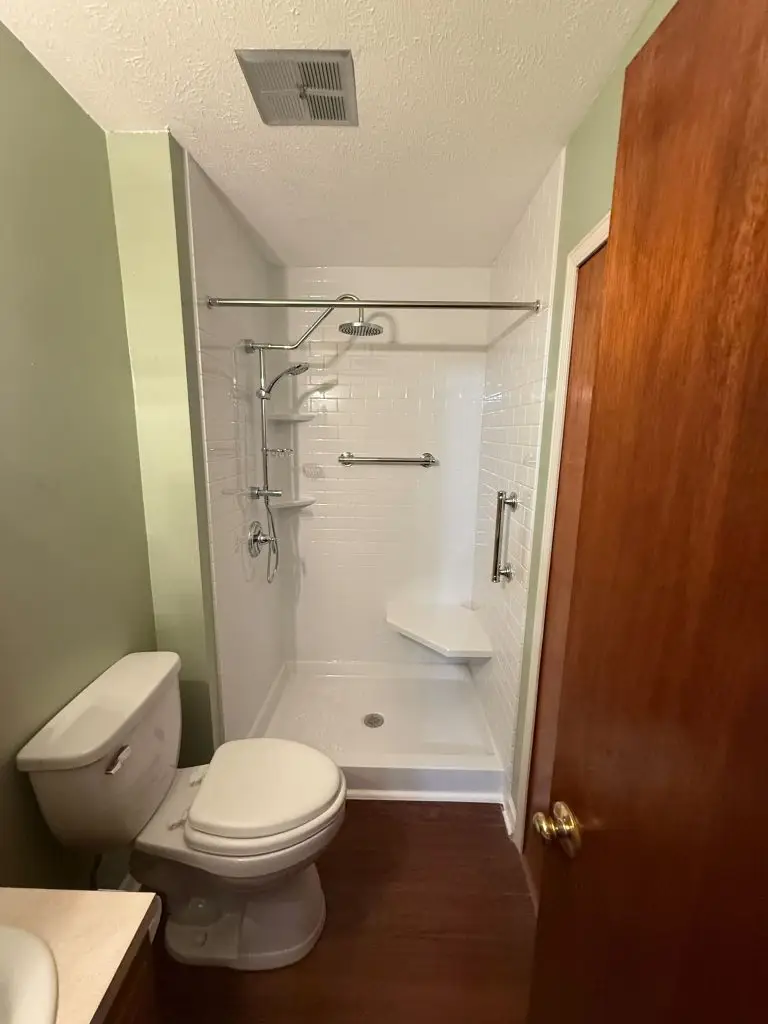
Grout-free wall panels are large, solid, non-porous panels that cover the shower walls with few or no seams. They come in looks that mimic marble, subway tile, and stone, so you get the style of tile without the grout lines.
Because there’s no grout, there’s nowhere for mold to grow, and cleaning is as simple as wiping the walls down. Panels are also sealed at the seams and corners, which keeps water inside the shower and out of your walls.
- Pros: no grout to scrub or reseal, resists mold and mildew, wipes clean, fast install, tile and stone looks
- Cons: fewer custom mosaic patterns than tile
This is the wall system we install at Windows Plus, and it’s the main reason homeowners tell us they’ll never go back to grout.
What to Think About Before You Choose
How much cleaning are you willing to do? If scrubbing grout is the thing you hate most about your current shower, tile and stone will give you the same problem again.
Is anyone in the house older or less mobile? Smooth, easy-to-clean walls pair well with a low-threshold shower base that’s easier to step into. Read more in our post on shower safety.
How long can you be without a shower? Tile and stone can take several days to install and cure. Panels go up much faster, often in a day or two.
What’s behind the wall? Whatever you choose, the old walls should come out so the framing and subfloor can be checked. Covering soft or moldy walls traps the problem.
Kentucky Considerations
Louisville summers are humid, and bathrooms in older homes often don’t vent well. That humidity is exactly what grout mold loves. A non-porous wall surface and a properly sealed shower make a big difference in keeping mildew under control, especially in basements and older homes.
New Shower Walls From Windows Plus
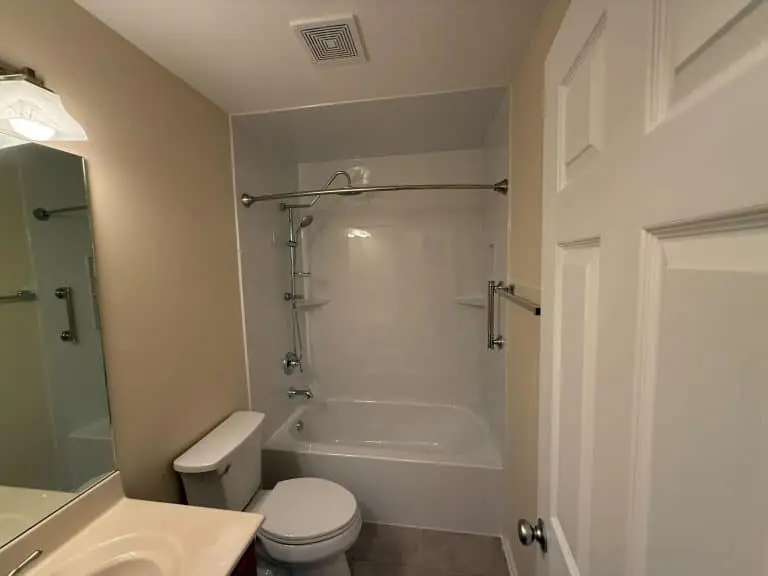
Windows Plus replaces old tile, fiberglass, and tub surrounds with grout-free wall panels and a new shower base, built to fit your space. Our own crews remove the old shower, check the wall and subfloor for damage, and install the new shower in one project, with one crew from start to finish. Every installation is backed by our lifetime warranty.
Homeowners across Louisville, Lexington, and Southern Indiana rate us 4.8 stars on Google from more than 600 reviews.
See our shower replacement options, look at walk-in showers, or check our current offers.
Call (502) 494-0120 or schedule your free in-home estimate.
Frequently Asked Questions
What is the best material for shower walls?
For most homeowners, grout-free wall panels are the best balance of looks, easy cleaning, and mold resistance. Tile and stone look great but need grout and sealing upkeep. Fiberglass is the least durable.
What is the easiest shower wall to keep clean?
A non-porous, grout-free wall panel. There are no grout lines to scrub, so you just wipe the walls down.
Can you put new shower walls over old tile?
It’s possible, but we don’t recommend it. Covering old tile hides any water damage or mold behind it. Removing the old walls lets the installer check the framing and fix problems before the new walls go up.
How long does it take to replace shower walls?
Grout-free panels can often be installed in a day or two. Tile and natural stone usually take several days because the tile, grout, and sealant need time to set and cure.